Loading the player...

Information
Decoding Compulsive Sexual Behavior Disorder: Medical Insights and Therapeutic Strategies
Original Recording Date :
Course Format
Recorded webinar.
Description: This training is designed for mental health professionals seeking to deepen their understanding of Compulsive Sexual Behavior Disorder (CSBD) from a medical and psychotherapeutic perspective. Participants will explore the physiologic underpinnings and contributing factors of CSBD, including differential diagnoses, the impact of neurologic and genital diseases, and the effects of various medications and substances. The session will also address the ongoing debates surrounding the classification and diagnostic criteria for CSBD, alongside the challenges of distinguishing between normative behavior and pathology. Attendees will learn about the interplay between emotion dysregulation, moral incongruence, and overlapping mental health conditions such as anxiety and depression. Attendees will develop competence in best counseling practices for addressing this newer diagnosis. Importantly, the training will highlight when to refer clients to medical providers for evaluation of physiological components impacting sexual behavior, ensuring a comprehensive approach to assessment and treatment.
Learning Objectives:
- Explain the differential diagnoses associated with Compulsive Sexual Behavior Disorder, including the impact of neurologic and genital diseases.
- Identify potential contributing factors, such as medications and substances, that influence sexual behavior and function.
- Analyze the role of emotion dysregulation and moral incongruence in the manifestation of CSBD and discuss the implications for treatment.
- Recognize the signs that warrant referral to a medical provider for the evaluation of physiological components.
- Develop a holistic approach to diagnosing and treating CSBD that prioritizes understanding the individual’s experiences, comorbid conditions, and societal attitudes toward sexuality.
Research:
- Bőthe, B., Potenza, M. N., Griffiths, M. D., Kraus, S. W., Klein, V., Fuss, J., & Demetrovics, Z. (2020). The development of the Compulsive Sexual Behavior Disorder Scale (CSBD-19): An ICD-11 based screening measure across three languages. Journal of Behavioral Addictions, 9(2), 247–258. https://doi.org/10.1556/2006.2020.00034
- Briken, P. (2020). An integrated model to assess and treat compulsive sexual behaviour disorder. Nature Reviews Urology, 17(7), 391–406. https://doi.org/10.1038/s41585-020-0343-7
- Briken, P., Bőthe, B., Carvalho, J., Coleman, E., Giraldi, A., Kraus, S. W., Lew-Starowicz, M., & Pfaus, J. G. (2024). Assessment and treatment of compulsive sexual behavior disorder: A sexual medicine perspective. Sexual Medicine Reviews, qeae014. https://doi.org/10.1093/sxmrev/qeae014
- Goldstein, I., Komisaruk, B. R., Pukall, C. F., Kim, N. N., Goldstein, A. T., Goldstein, S. W., Hartzell-Cushanick, R., Kellogg-Spadt, S., Kim, C. W., Jackowich, R. A., Parish, S. J., Patterson, A., Peters, K. M., & Pfaus, J. G. (2021). International Society for the Study of Women’s Sexual Health (ISSWSH) Review of Epidemiology and Pathophysiology, and a Consensus Nomenclature and Process of Care for the Management of Persistent Genital Arousal Disorder/Genito-Pelvic Dysesthesia (PGAD/GPD). The Journal of Sexual Medicine, 18(4), 665–697. https://doi.org/10.1016/j.jsxm.2021.01.172
- Hevesi, K., Tamas, S., & Rowland, D. L. (2023). Why Men Masturbate: Reasons and Correlates in Men with and without Sexual Dysfunction. Journal of Sex & Marital Therapy, 1–15. https://doi.org/10.1080/0092623X.2023.2204088
- Lew-Starowicz, M., & Coleman, E. (2022). Mental and sexual health perspectives of the International Classification of Diseases (ICD-11) Compulsive Sexual Behavior Disorder. Journal of Behavioral Addictions, 11(2), 226–229. https://doi.org/10.1556/2006.2022.00032
- Lew-Starowicz, M., Lewczuk, K., Nowakowska, I., Kraus, S., & Gola, M. (2020). Compulsive Sexual Behavior and Dysregulation of Emotion. Sexual Medicine Reviews, 8(2), 191–205. https://doi.org/10.1016/j.sxmr.2019.10.003
Target Audience: social workers, mental health practitioners, creative arts therapists, marriage and facility therapists, psychologists, addiction professionals, case managers, psychiatric nurse practitioners and other interested individuals.
Customer ServiceWe are happy to respond to any concerns or questions you may have. Please contact us at by email at sw-ce@buffalo.edu or by phone at 716-829-5841.
ADA Accommodations: If you require any support for your ADA needs in the United States, please contact us by email at least 3 weeks prior to the event by email at sw-ce@buffalo.edu or by phone at 716-829-5841.
Pebble Kranz, MD, FECSM, IF, MSCP
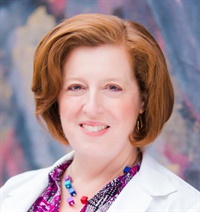
Pebble Kranz, MD, FECSM, IF, MSCP, a family physician, menopause medicine, and sexual medicine specialist, graduated from Brown University's Medical School in 2007 and completed residency with the University of Rochester Family Medicine Residency Program in 2011 with a focus on psychosocial aspects of primary care. After serving as residency faculty and a primary care doctor for the University of Rochester, Dr. Kranz pursued additional training in sexual, menopause, and gender medicine, earning fellowships from the European Committee on Sexual Medicine, the International Society for the Study of Women's Sexual Health, certification from the Menopause Society as an expert menopause medicine practitioner, as well as status as an Advanced Practitioner in Optimal Sexual Experiences Group Couples Therapy. She serves on the board of the Scientific Network on Female Sexual Health and Cancer and is a consultant to the University of Rochester’s Pluta Breast Center’s Sexual Wellness Clinic. She is founder and medical director for The Rochester Center for Sexual Wellness, providing comprehensive care for sexual, relational, and gender concerns in Western New York. Dr. Kranz is committed to educating healthcare professionals at all levels and the community on medical care for sexual concerns.
Daniel Rosen, LCSW-R, CST, CSTS

Dan Rosen, LCSW-R, CST, CSTS, a clinical social worker, sex therapist, and sex therapy supervisor certified by American Association of Sexuality Educators, Counselors and Therapists (AASECT), graduate from NYU’s School of Social Work in 1991. Since then, Mr. Rosen has worked in a variety of mental health facilities till transitioning fully to private practice in 2001 and then merging his practice into the Rochester Center for Sexual Wellness (RCSW) in 2017, the year it was founded by Dr. Pebble Kranz, MD. Mr. Rosen has studied extensively in the field of sex therapy and group therapy. He is an Advanced Practitioner in Optimal Sexual Experiences Group Couples Therapy and a student of Modern Analysis through the Center for Group Studies. He is on the Ethics committee for the Society for the Advancement of Sexual Health and chaired the Ethics Advisory Committee for AASECT 2016-2018. Mr. Rosen serves as the Director of Behavioral Health for RCSW, providing comprehensive care for sexual, relational, and gender concerns in Western New York and supervision of the clinical team and interns. Mr. Rosen supervises candidates from across the country for certification by AASECT; he has been educating people in university and in post graduate training in the field of sex therapy since 2014.

